Port to Place Infrastructure
A high-fidelity technical blueprint. From global import to inland industrial clusters, this is our deployable solution for large-scale decarbonization.
01 // The Maritime Gateway
Step 1: Global Import
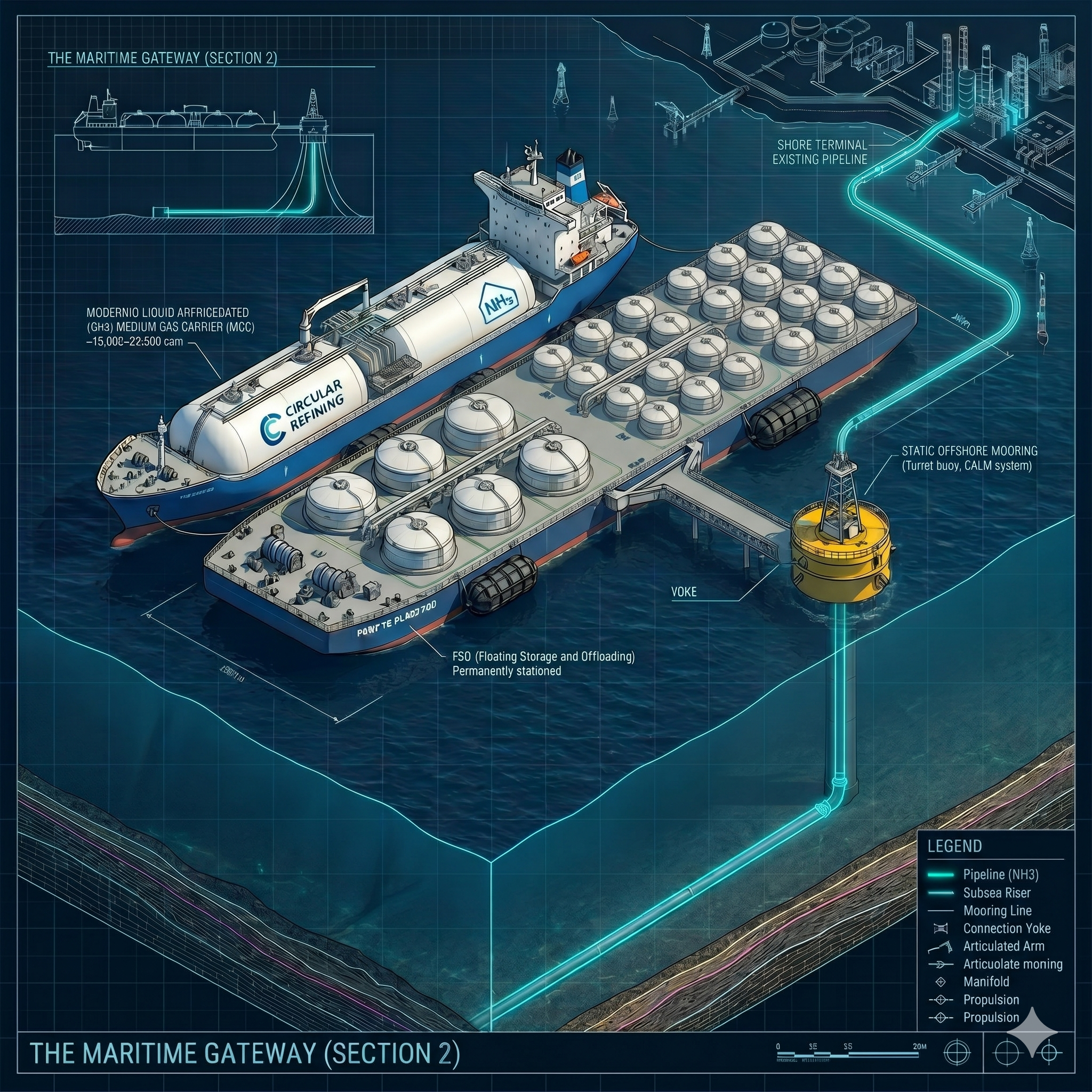
Arrival of international Medium-sized Gas Carriers (MGC) at our deep-water static offshore mooring systems.
Step 2: The Floating Warehouse
Utilizing a Floating Storage and Offloading (FSO) Barge. The 'Jetty-less' advantage means no dredging, no permanent concrete piers, and minimal impact on SSSI coastal waters.
Step 3: Transfer Logic
High-capacity ship-to-ship offloading processes, transferring liquid energy safely into the FSO's refrigerated containment systems.
02 // The Subsea Artery
Step 4: Secure Shore-to-Mooring Transit
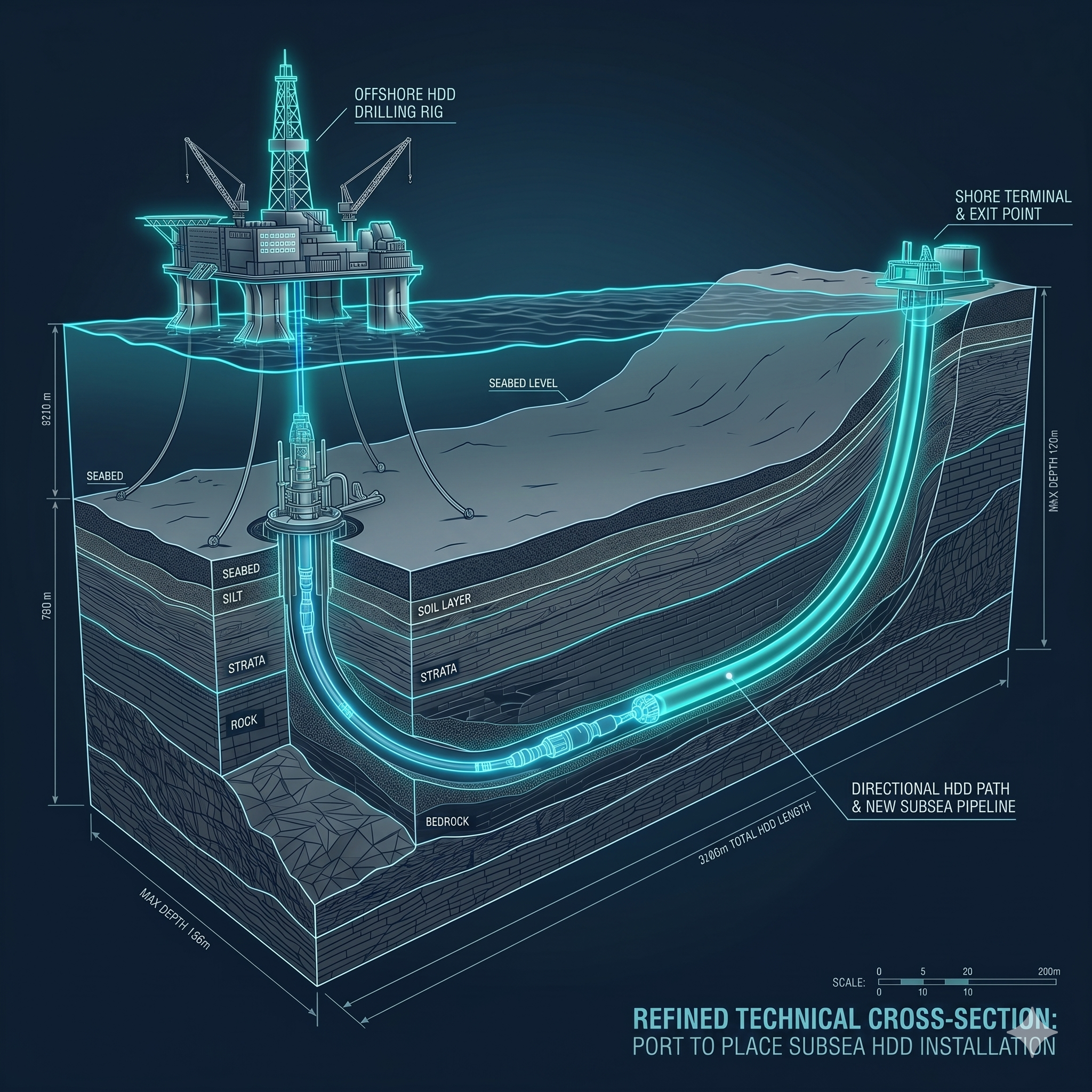
A high-integrity subsea pipeline installed using Horizontal Directional Drilling (HDD). This acts as the 'Invisible Bridge', safely bypassing sensitive coastal obstacles and landing directly into an onshore Header Tank.
SYS_STATUS: // PIPELINE_INTEGRITY_MAX // ZERO_COASTAL_IMPACT
03 // The Four Pillars of Distribution
The onshore "Hub" routes energy exactly where it is needed through four distinct, high-capacity channels.
TANK
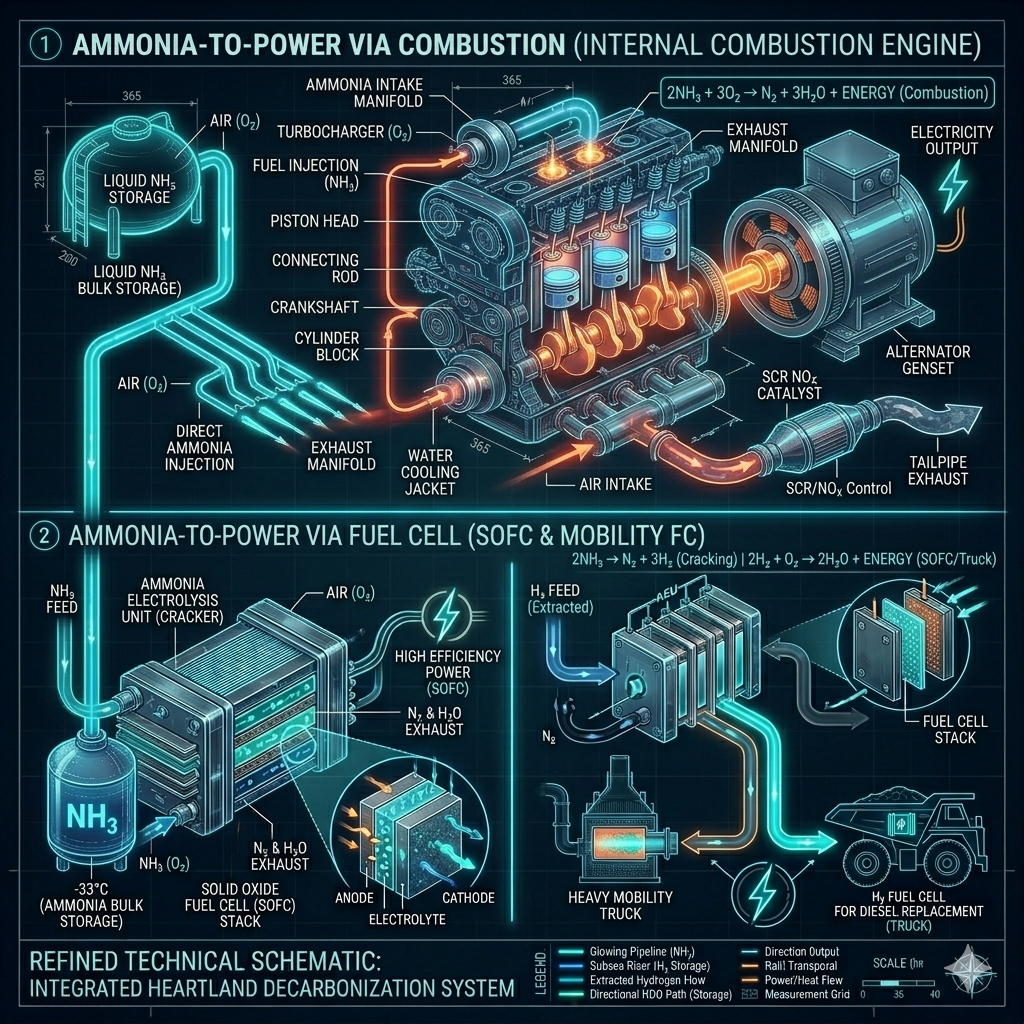
Immediate decarbonization of heavy machinery and port logistics via ammonia-to-power generators.
Supplying ammonia as fuel directly at the static mooring or via 'Shuttle Carriers' to regional ports.
Utilizing stored ammonia for zero-carbon local power generation and grid-balancing services.
Loading liquid ammonia onto specialized Road and Rail transport for deep-inland transit.
04 // OUTCOMEHeartland Decarbonization
Deep inland industrial clusters are fed by the National Artery, utilizing dual-path technologies to replace natural gas and diesel.
Direct Power
Ammonia utilized directly as a drop-in carbon-free fuel for high-heat industrial processes and turbines.
Molecular Cracking
Breaking ammonia into high-purity Hydrogen to replace natural gas in the 'Logistical Heartlands'.
EXPLORE TECHNOLOGIES